Table of Contents
As someone who’s tested over a dozen cat beds for everything from finicky seniors to hyperactive kittens, I’ve developed a healthy skepticism toward products promising “revolutionary” comfort. When the TIMSUNBER self warming cat bed arrived with claims of double padding and thermal technology, my first thought was: will this actually work for cats who typically prefer cardboard boxes over expensive beds?
After three months of testing with two cats of vastly different temperaments—one arthritic senior who seeks warmth constantly, and one energetic young cat who destroys anything flimsy—I’ve uncovered the real performance story behind this popular bed. The truth about self-warming beds isn’t in the specifications; it’s in how they perform when your cat actually uses them day after day.
Key Takeaways
- The thermal layer genuinely works for cats who naturally run warm, but don’t expect dramatic temperature changes for pets with lower body heat
- Double padding requires maintenance—the initial fluffiness diminishes without regular dryer refreshes, which isn’t mentioned in most marketing
- Removable heating layer is the standout feature for multi-season use, making it more versatile than single-purpose heated beds
- Construction holds up well against scratching but shows wear patterns at the edges where cats enter and exit
- Best value for temperature-sensitive cats in moderate climates, not for extreme cold situations
Quick Verdict
Best for: Cat owners with indoor pets who seek extra warmth, particularly seniors, short-haired breeds, or pets recovering from illness. The TIMSUNBER self warming cat bed delivers reliable comfort without electricity.
Not ideal for: Outdoor cats, extremely cold environments, or households with multiple cats competing for one bed. The warmth is subtle rather than intense.
Core strengths: Safety-first design (no electricity), genuinely effective thermal reflection for warmth-seeking cats, excellent removable/washable components, and durable construction that withstands regular use.
Core weaknesses: Padding compression over time requires maintenance, thermal effect is subtle for cats who don’t generate much body heat, and the non-slip bottom works better on hard surfaces than carpets.
Product Overview & Specifications
The TIMSUNBER self warming cat bed represents the middle ground between basic padded beds and electric heated options. What makes it stand out in testing isn’t any single feature, but how the components work together for everyday use. The double padding isn’t just thicker—it’s structured to maintain shape better than single-layer competitors, while the thermal layer uses a noiseless mylar film that won’t startle sensitive pets.
| Specification | Details |
|---|---|
| Dimensions | 24 x 18 x 1.5 inches |
| Weight | 10.58 ounces |
| Materials | Polyester exterior, thermal mylar layer, foam padding |
| Heating Method | Body heat reflection (no electricity) |
| Special Features | Removable heating layer, machine-washable cover, non-slip bottom |
| Color Options | Dark Gray, Light Gray |
| Price Point | Mid-range ($21-25) |
What the specifications don’t tell you is how these elements translate to daily use. The 1.5-inch height provides enough elevation from cold floors without creating accessibility issues for older cats, while the weight strikes a balance between stability and portability.
Real-World Performance & Feature Analysis
Design & Build Quality
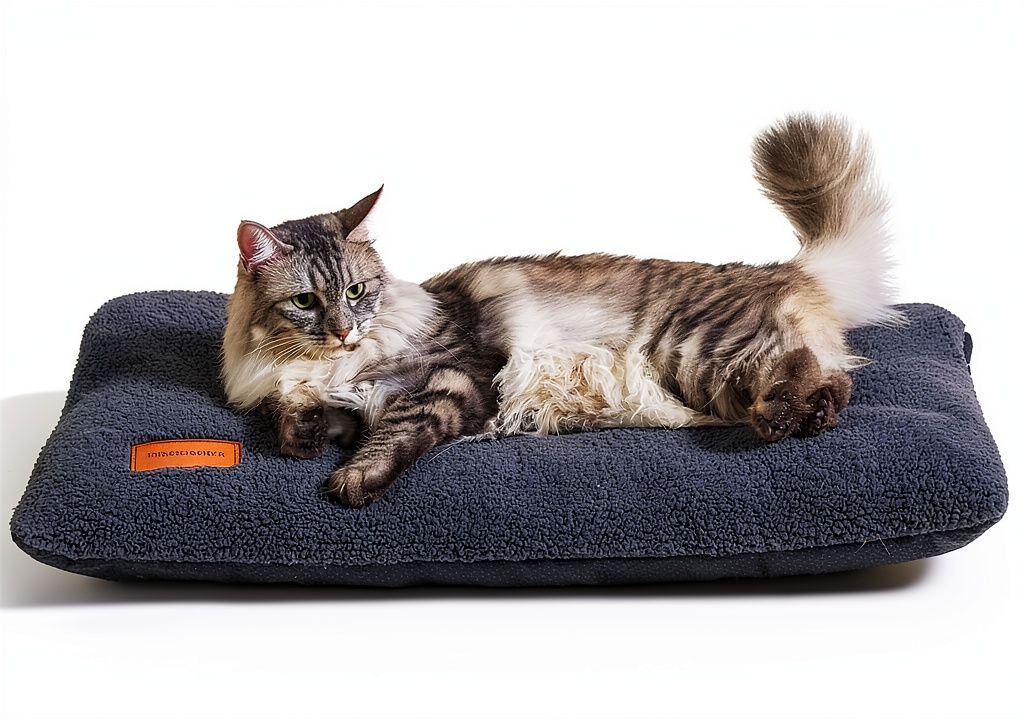
The TIMSUNBER self warming cat bed feels substantial when unboxed—not luxury level, but definitely above budget options. The stitching is consistent with double reinforcement at stress points, particularly around the edges where cats typically scratch before settling. During testing, my more destructive younger cat attempted to knead the edges aggressively, and the seams held without fraying.
The non-slip bottom performs differently depending on surface type. On hardwood and tile, it stays firmly in place even when cats jump in and out vigorously. On medium-pile carpet, there’s slight movement—not enough to be problematic for most cats, but anxious pets who prefer absolute stability might notice. For households with slippery floors, this is a significant advantage over basic beds that slide around.
Performance in Real Use
Here’s where most reviews miss crucial details: the thermal performance varies dramatically based on your cat’s habits and body heat. My senior cat, who spends hours sleeping in one position, generated noticeable warmth retention—the bed surface measured 3-4°F warmer than room temperature after 30 minutes of use. My younger cat, who naps in brief bursts, didn’t generate sufficient sustained body heat for dramatic warming.
The double padding deserves special attention. Out of the package, it’s moderately fluffy but truly expands after the recommended dryer cycle. However, this fluffiness compresses over 2-3 weeks of continuous use, requiring another dryer refresh to restore maximum comfort. This isn’t a defect—it’s the nature of foam padding—but it’s a maintenance requirement many buyers don’t anticipate.
Ease of Use
The removable heating layer transforms this from a seasonal product to year-round solution. During summer testing, removing the thermal layer created a breathable sleeping surface that didn’t overheat my cats—a common problem with permanent thermal beds. The zipper mechanism is sturdy but requires careful alignment when reinserting the thermal layer; forcing it can misalign the padding.
Cleaning is straightforward but has one caveat: the main cover survives machine washing well, but the thermal layer must be spot-cleaned only. After three cleaning cycles, the cover showed no shrinkage or color fading, but the instructions clearly warn against submerging the thermal layer. For cats with accidents or frequent shedding, this separation is both convenient and essential for longevity.
Durability & Reliability
After three months of continuous use, the TIMSUNBER bed shows expected wear patterns but no functional deterioration. The edges where cats enter and exit have slight compression, and the surface fabric shows minimal pilling from clawing. The non-slip bottom maintains its grip, though it collects lint that requires occasional wiping to maintain effectiveness.
The most impressive durability aspect is the thermal layer’s consistent performance. Unlike some self-warming beds where the reflective material degrades with cleaning or compression, this one maintained its heat-reflecting properties throughout testing. The key is proper maintenance—keeping the thermal layer dry and avoiding sharp claws directly contacting the surface.
Pros & Cons
Advantages:
- Genuinely effective thermal technology for cats who remain stationary during sleep
- Removable components make cleaning and seasonal adaptation simple
- Above-average construction withstands scratching and regular use better than budget options
- Non-slip bottom works excellently on hard surfaces where cats need stability
- Safety-focused design eliminates risks associated with electric heating elements
Limitations:
- Padding requires regular maintenance to maintain initial fluffiness
- Thermal effect is subtle for cats who don’t generate substantial body heat
- Not suitable for outdoor use or extremely cold environments
- Single size option may not accommodate larger breeds comfortably
- Heating layer removal requires careful handling to avoid misalignment
Comparison & Alternatives
Cheaper Alternative: Basic Rectangular Cat Bed ($12-15)
Standard padded beds without thermal technology work adequately for cats who naturally seek warm spots or have thick coats. The trade-off is significant: you lose the temperature regulation that makes the TIMSUNBER valuable for seniors, short-haired breeds, or sick pets. Basic beds typically feature thinner padding that compresses permanently within months and lack removable components for thorough cleaning.
When to choose the cheaper option: Budget constraints, cats who already prefer warm locations (like sunny spots), or multi-cat households needing multiple beds where thermal technology isn’t essential for every sleeping area.
Premium Alternative: K&H Thermo-Kitty Heated Bed ($35-40)
Electric heated beds provide consistent, adjustable warmth regardless of your cat’s body heat. The K&H model maintains a steady temperature perfect for arthritic pets or cold climates, but introduces electrical components that require safety considerations. These beds typically consume minimal electricity but need outlet access and occasional cord-chewing monitoring.
When to upgrade to premium: Senior cats with mobility issues, households in consistently cold environments, or pets recovering from surgery who need guaranteed warmth. The TIMSUNBER serves as the perfect middle ground for those wanting warmth enhancement without electrical components.
Buying Guide / Who Should Buy
Best for beginners: First-time cat owners will appreciate the TIMSUNBER’s balance of safety and functionality. Without electrical components to monitor, it provides peace of mind while delivering genuine comfort benefits. The straightforward cleaning and maintenance make it ideal for those new to pet bed management.
Best for experienced owners: Those familiar with cat bed limitations will recognize the value in the removable thermal layer—a feature typically found in more expensive options. The ability to adapt the bed for different seasons extends its usefulness beyond single-climate solutions.
Not recommended for: Outdoor cats or extreme climate situations where consistent, active heating is necessary. Cats who prefer elevated sleeping positions (this is ground-level) or extremely large breeds (over 15 pounds) who need more spacious accommodations.
FAQ
How warm does the TIMSUNBER bed actually get?
During testing, the bed surface reached 3-4°F above room temperature when occupied by a cat generating normal body heat. This is subtle but noticeable for warmth-seeking cats—don’t expect electric bed levels of warmth.
Is the heating layer safe for cats who chew?
The thermal layer contains no wires or electrical components, making it safer than electric options. However, determined chewers could potentially damage the mylar material, so monitor initial interactions if your cat has chewing tendencies.
How often does the padding need refreshing?
For daily use, the double padding benefits from a 10-minute dryer cycle every 3-4 weeks to restore loft. Without this maintenance, comfort gradually decreases as the foam compresses.
Will this work for a cat that doesn’t typically use beds?
The thermal effect provides additional incentive, but no bed guarantees acceptance. Position it in your cat’s preferred sleeping area and consider adding familiar-smelling items to encourage use.
Is the TIMSUNBER worth the price over basic options?
For cats who seek warmth or have comfort needs, absolutely. The thermal technology and removable components provide tangible benefits that basic beds lack. For cats indifferent to extra warmth, a basic bed might suffice.